Why every garden needs a path to nowhere
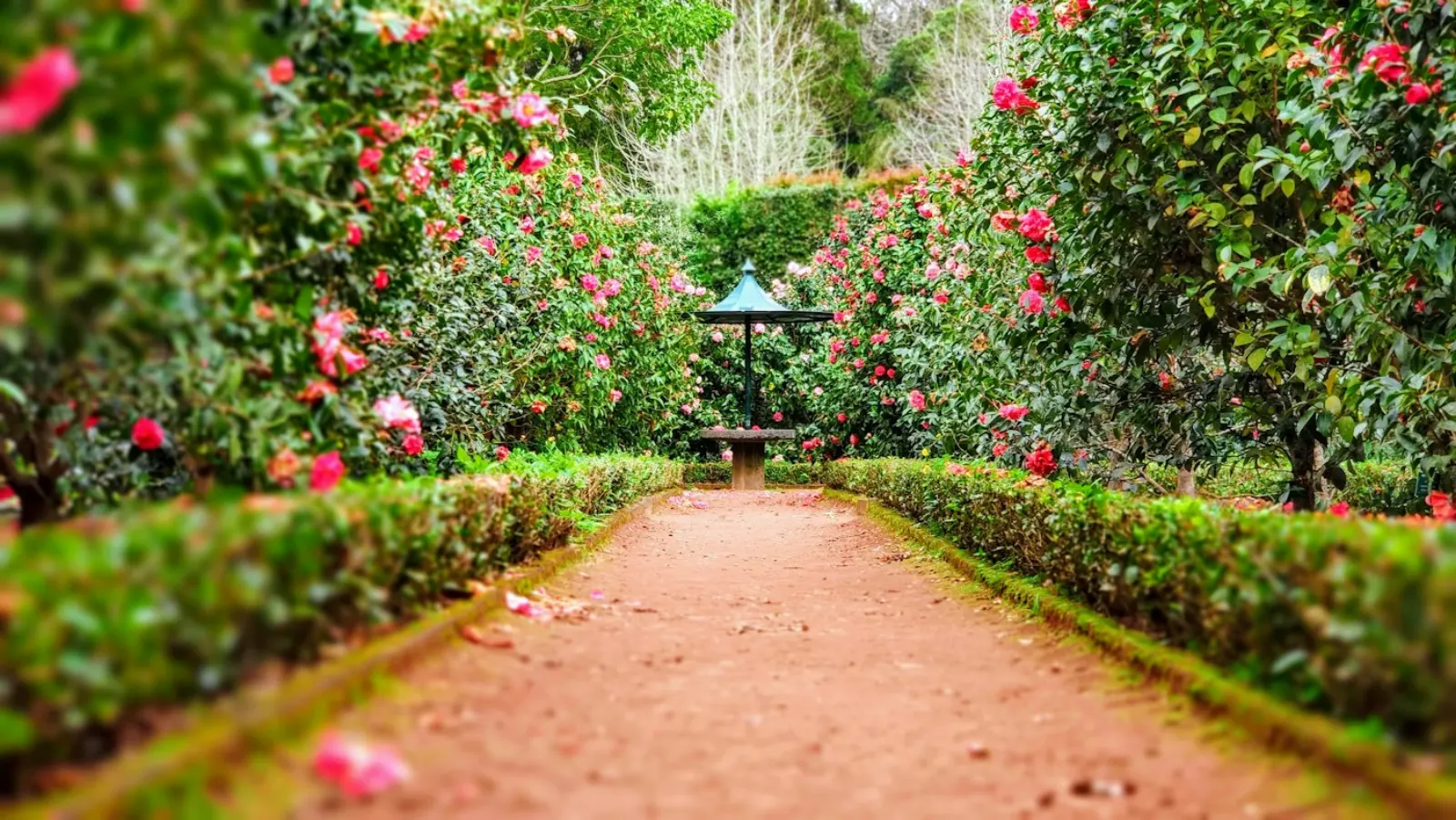
A straight path tells you where you’re going. A curving one makes you want to find out. That small difference is the single cheapest trick in garden design.
When we survey a new garden, one of the first questions we ask is: what can you see from the back door? Too often the answer is “everything”. The whole plot, laid bare in a single glance, with nothing left to discover.
Hide something
The fix is to hide part of the garden. A path that bends behind a shrub, a hedge with a gap, an arch with something just out of view. Your brain fills in the rest — and assumes there is more garden than there really is.
“The best gardens are never fully visible from one place. They reveal themselves as you walk.”
How we lay them out
- Make the path at least 90 cm wide so two people can walk side by side.
- Use gentle curves — a 3 m radius or more feels natural, anything tighter feels fussy.
- End it somewhere: a bench, a bird bath, a view, or simply a gate that suggests more.
- Choose a surface that drains: gravel, bark chip or permeable pavers.
Planting the edges
Soft edges make paths feel older. Let lady’s mantle, catmint and creeping thyme spill over the gravel. In shade, ferns and hostas do the same job. Within two summers nobody will believe the path is new.
If you’d like help planning a path of your own, our design team runs half-day consults from $480 — and we promise to find somewhere for it to go.